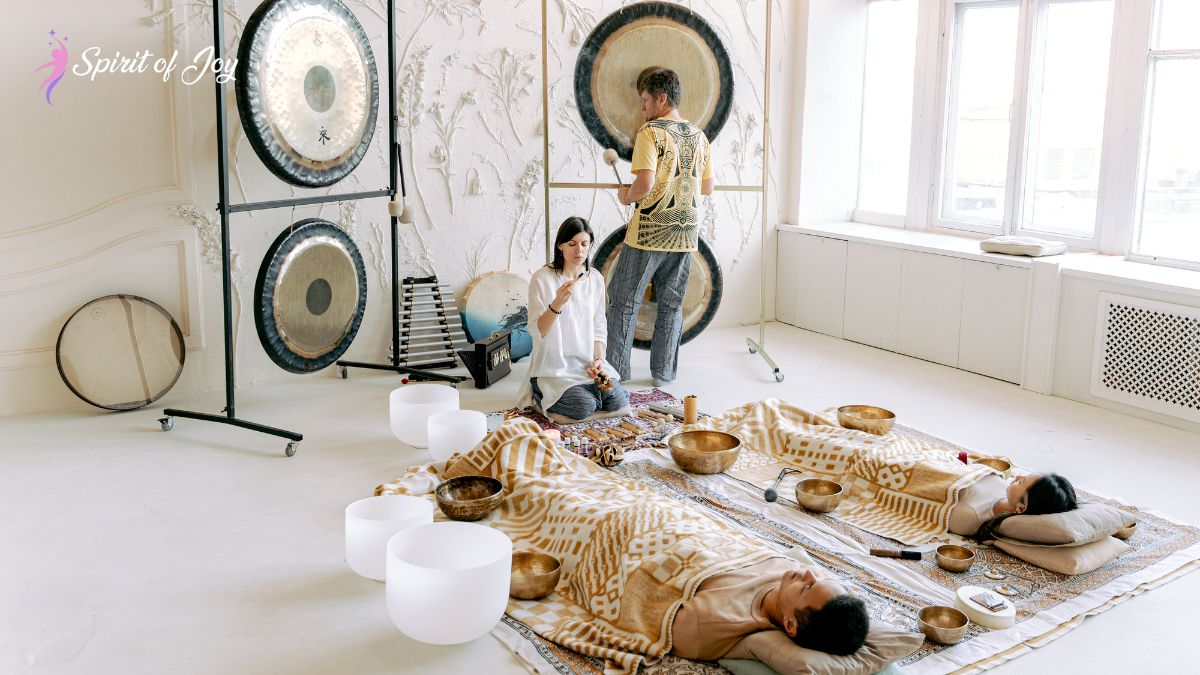
Sound meditationThe use of sound, such as singing bowls, gongs, or chanting, to induce a meditative state and promot... rituals are culturally important because they help us preserve ancient traditions and foster communal well-being. Rooted in practices like Tibetan Buddhism and Siberian Shamanism, these rituals use instruments like singing bowls and gongs to create deep meditative states and spiritual connections. They align our chakrasThe seven main energy centers in the body, each associated with different aspects of physical, emoti..., balance our energy, and promote mental and physical health. Sound rituals also carry the wisdom of our ancestors, connecting us to our heritage and cultural identity. Exploring these practices further reveals their transformative power and deep-seated significance in our lives.
Key Takeaways
- Sound meditationA reflective form of prayer where the focus is on contemplating spiritual truths or mysteries. rituals preserve and pass down ancient cultural practices and wisdom.
- They foster spiritual connection and mental well-being across diverse cultures.
- Rituals utilize traditional instruments, reflecting rich cultural heritage and customs.
- Practices ensure community identity and continuity, emphasizing sound’s healing power.
- Instruments like singing bowls and drums are believed to align chakras and induce relaxation.
Ancient Origins of Sound Healing
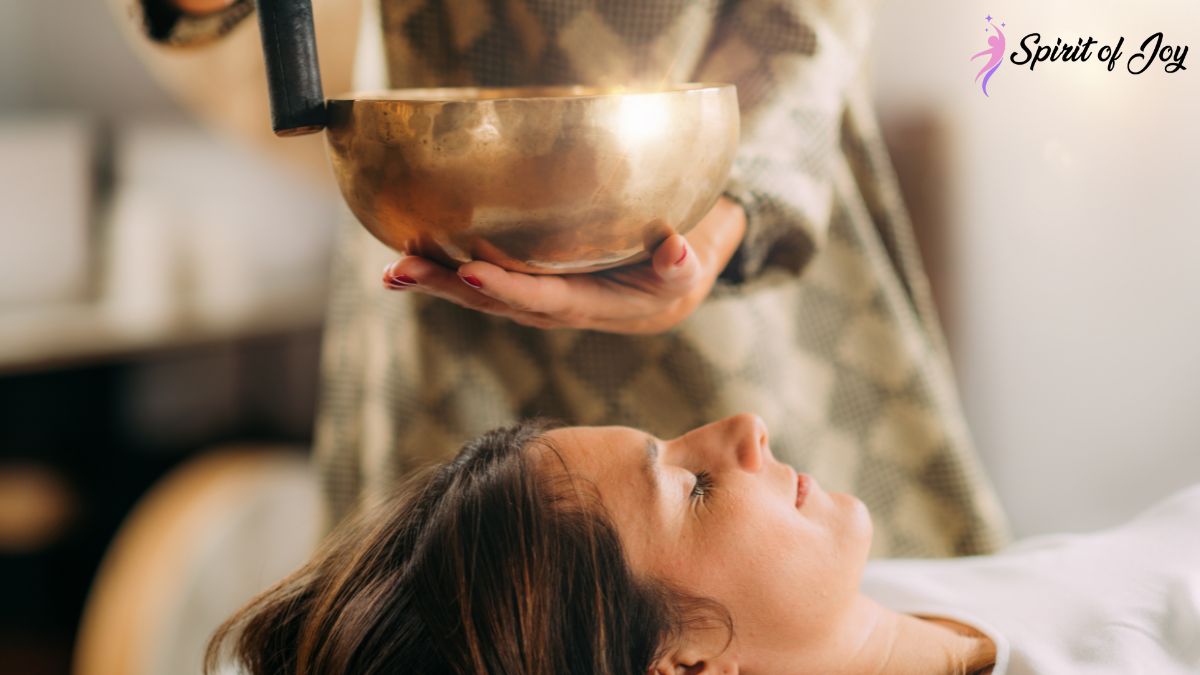
Sound healingThe use of sound vibrations, such as singing bowls, tuning forks, and chants, to balance and heal th... rituals have deep-seated roots in ancient traditions like Kashmiri Shaiva TantraA spiritual practice that seeks to transcend the material world through rituals, meditation, and the..., Siberian Shamanism, and Spiritual Taoism. These practices aren’t just about creating pleasant sounds; they’re a profound journey into the ancient origins of human spirituality and healing. Tibetan monks, for instance, have long used sound to foster deep meditative states and spiritual awakeningThe process of becoming more aware of one's spiritual nature and the deeper truths of existence.. Their chants and the resonant tones of their singing bowls are believed to align the mind and body, promoting holistic well-being.
In Siberian Shamanic practices, sound plays a pivotal role in connecting practitioners with the spiritual domain. Shamanic beliefs hold that objects like drums are alive and powerful, capable of inducing trance-like states. These drums aren’t merely instruments; they’re seen as powerful allies that help the shaman journey into other dimensions.
Our focus in sound healing is to create soundscapes with abstract meanings, transcending words and thoughts to induce meditative states and restorative trances. By tapping into these ancient origins, we’re not just participating in a ritual; we’re embracing a timeless tradition that connects us to our ancestors and the broader cosmos. This deep connection underscores the cultural importance of sound meditation rituals.
Traditional Instruments and Practices
Moving from the ancient origins of sound healing, we see how traditional instruments and practices have sustained their significance through centuries. Instruments like Tibetan singing bowlsUsing the sound vibrations from Tibetan singing bowls to cleanse crystals by breaking up stagnant en... and gongs have been central to cultural rituals and sound therapyThe use of sound, such as tuning forks, singing bowls, or specific frequencies, to promote healing a..., offering profound meditation and healing experiences. These sound bowls produce specific frequencies and vibrations believed to align chakras and restore energy balance, a practice deeply rooted in spiritual traditions.
ChantingThe rhythmic repetition of sacred sounds, words, or phrases used in various spiritual traditions to ... mantras, playing drums, and using sound to induce tranceAn altered state of consciousness induced through various methods, such as drumming, dancing, or med... states are integral to many ancient practices. These rituals not only promote mental and physical well-being but also serve as a bridge connecting us to our cultural heritage and spirituality.
Indigenous cultures worldwide incorporate unique instruments like didgeridoos, flutes, and bells into their sound meditation rituals, each carrying distinct frequencies that resonate with the natural world.
Shamanic Beliefs in Sound
Often rooted in ancient traditions, Shamanic beliefs assign profound significance to the objects utilized in their rituals, viewing them as living beings imbued with immense power. In Shamanism, drums, rattlesInstruments used in shamanic rituals to invoke spirits, clear energy, and support healing practices...., and other instruments aren’t just tools; they’re revered entities that facilitate sound healing. By treating these objects with utmost reverence, shamans give offerings and communicate with them, establishing a deep, reciprocal connection.
In our exploration of Shamanic sound healing, acknowledging that these objects are believed to be alive and empowered is crucial. This belief transforms the healing experience, as the sounds produced by these instruments are thought to access altered states of consciousness and bring about restorative, trance-like conditions.
The power attributed to these objects influences the entire spiritual practice, making the sound vibrations they produce even more potent.
When we engage with Shamanic practices, we’re not just listening to sounds; we’re participating in a sacred exchange. The objects used in these rituals play a pivotal role in the healing process, bridging the physical and spiritual domains. Understanding Shamanism’s reverence for these objects enriches our appreciation of sound healing’s cultural and spiritual aspectsAngular relationships between planets in the horoscope, affecting their influence (e.g., trine, squa....
Evolution of Sound Meditation
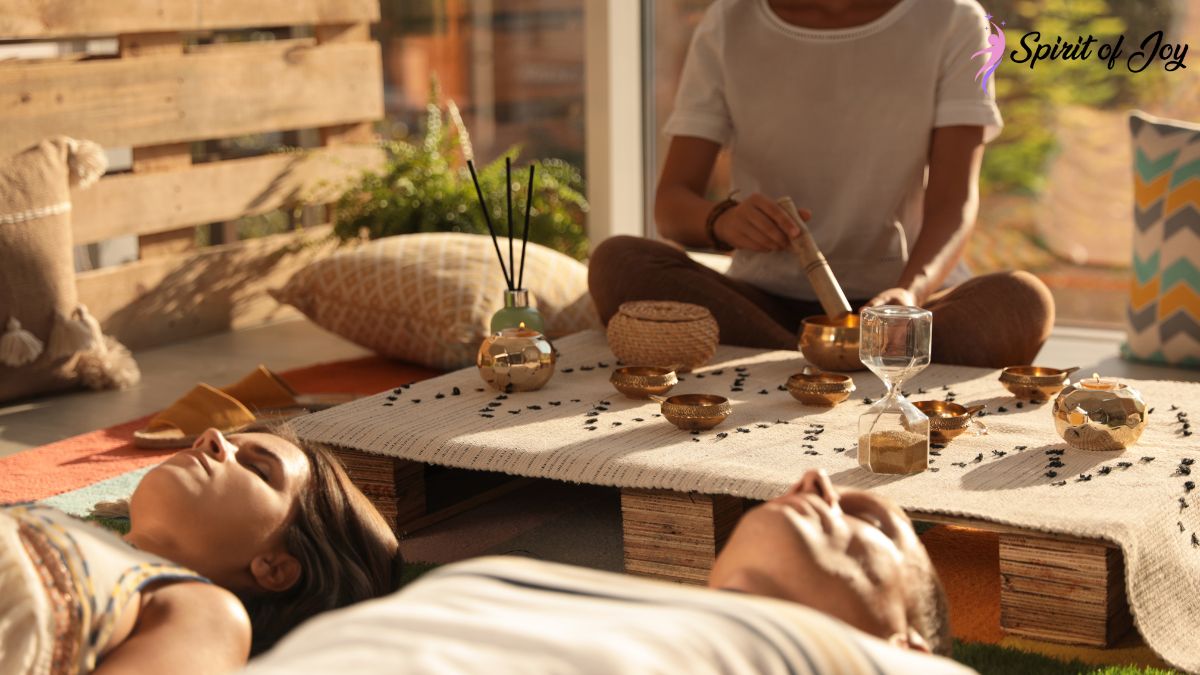
Recognizing the reverence shamans hold for their instruments, we can see how sound meditation rituals have evolved from these ancient traditions. From the intricate soundscapes of Shamanism, Tibetan Buddhism, and Taoism, we’ve inherited a rich tapestry of sound and music that transcends mere auditory experiences. These cultural traditions have shaped modern sound meditation into a practice that promotes deep relaxation and altered states of consciousness.
In today’s sound meditation practices, we use:
- Gongs: Resonating with powerful, deep vibrations that wash over us.
- Singing bowls: Producing harmonic tones that guide our minds beyond words.
- Chimes: Creating delicate, calming sounds that enhance our focus.
- Drums: Offering rhythmic beats that anchor us in the present moment.
These instruments craft an environment that encourages surrender rather than active striving for a specific mental state. By immersing ourselves in these sounds, we engage in a meditative journey that aligns with ancient methods of inducing trance and transformation.
The evolution of sound meditation honors the deep-rooted cultural beliefs and traditions that have long recognized the power of music and sound. Through this practice, we continue to explore and appreciate the restorative and transformative experiences it offers.
Cultural Significance of Sound
Though sound meditation rituals have been practiced for centuries, their cultural significance remains profound and enduring. These rituals are a testimony to how different cultures have harnessed the healing and transformative power of sound to foster spiritual connection and well-being. Sound meditation rituals aren’t just practices; they’re deeply rooted in the cultural heritage of communities worldwide, reflecting diverse cultural customs.
In many traditions, sound serves as a bridge to the spiritual domain, aiding meditation and introspection. For instance, Tibetan monks use singing bowls to create resonant sounds that promote a meditative state. Similarly, Native American cultures use drummingThe use of rhythmic drumming to induce a trance state, facilitating shamanic journeying and connecti... and chanting in their ceremonies, emphasizing the importance of sound in their spiritual practices.
The cultural significance of sound meditation rituals isn’t limited to spiritual or religious contexts. It’s also about passing down ancient practices through generations, preserving the community’s identity and wisdom. This continuity underscores the universal value placed on sound’s healing and transformative power across different societies.
Benefits of Sound Healing
Sound healing offers a multitude of benefits that extend beyond mere relaxation. We often find that it induces a relaxed and lucid state, which is incredibly beneficial for creativity and healing. By harnessing the power of sound vibrations, sound healers help us manage chronic stress and trauma, creating a pathway to holistic wellness.
Through practices such as a sound bathA therapeutic session where participants are immersed in the sound waves of gongs, singing bowls, an..., we can experience an altered sense of consciousness that promotes rest and restoration. This therapeutic tool uses various sounds to heal the sick in both physical and emotional domains. Sound healing provides a unique space for addressing ailments that affect our mind, body, and spirit.
Imagine the benefits:
- Stress Relief: Deep relaxation and reduced anxiety.
- Emotional HealingMeditation provides a safe space to process and heal from past emotional traumas and unresolved issu...: Release of past traumas and emotional blockages.
- Physical Recovery: Alleviation of chronic pain and tension.
- Enhanced CreativityMeditation can improve creative thinking by encouraging a relaxed and open state of mind.: A clear mind that fosters innovative thinking.
In conventional health settings, sound healing can be experienced without the need for a spiritual context, making it accessible to a broader audience. It’s about time we embrace the full potential of sound healing, acknowledging its profound impact on our overall well-being.
Criticisms and Challenges
As we explore the criticisms and challenges of sound meditation rituals, we must address the vague scientific evidence surrounding their physical effects. Despite anecdotal claims of their efficacy, particularly for conditions like PTSD, skepticism remains due to the lack of concrete data.
Additionally, some sound therapists incorporate these practices into conventional health settings without the spiritual elements, raising questions about their overall effectiveness and integration.
Scientific Validity Issues
The scientific validity of sound meditation rituals remains contentious, plagued by a lack of robust empirical evidence. While many practitioners and participants report positive physical effects from sound therapy, the scientific evidence supporting these claims is often lacking or inconclusive. As a result, skepticism persists regarding the overall effectiveness of these practices.
Let’s paint a picture of the challenges we face:
- Anecdotal reports: Many individuals share personal stories of relief and healing, yet these accounts are difficult to measure scientifically.
- Inconclusive studies: Research on sound meditation often yields mixed results, making it hard to draw definitive conclusions.
- Spiritual elements: The incorporation of spiritual aspects complicates efforts to validate these practices within a purely scientific framework.
- Skepticism in the scientific community: Without rigorous studies, the broader scientific community remains doubtful of sound therapy’s efficacy.
Despite some acknowledgment of benefits for conditions like PTSD, the mystery lingers for researchers.
Bridging the gap between the spiritual roots of sound meditation and the scientific community’s demand for empirical validation remains a significant hurdle. Sound therapists practicing in conventional health settings often leave out these spiritual elements, which can dilute the cultural richness of the rituals.
Conventional Medicine Integration
Many critics question the integration of sound healing into conventional medicine due to a perceived lack of scientific rigor. They argue the physical effects of sound therapy aren’t sufficiently documented in peer-reviewed studies. Instead, much of the support comes from anecdotal evidence, which understandably leaves some skeptical.
However, it’s worth mentioning that sound therapy has shown positive outcomes in treating conditions like PTSD, even if those results need further scientific validation.
Despite the skepticism, some sound therapists have found their place within conventional health settings. These practitioners often focus on the therapeutic aspects of sound therapy, deliberately excluding its spiritual elements to align more closely with medical standards. This approach helps bridge the gap between alternative and conventional medicine, though it remains a contentious topic.
The integration process isn’t without its challenges. The effectiveness of sound healing practices still sparks debate and exploration within the medical community. As we navigate these complexities, it’s crucial to keep an open mind while demanding rigorous scientific studies. Only then can we fully understand whether sound therapy can complement conventional medicine, providing holistic care without compromising scientific integrity.
Modern Applications
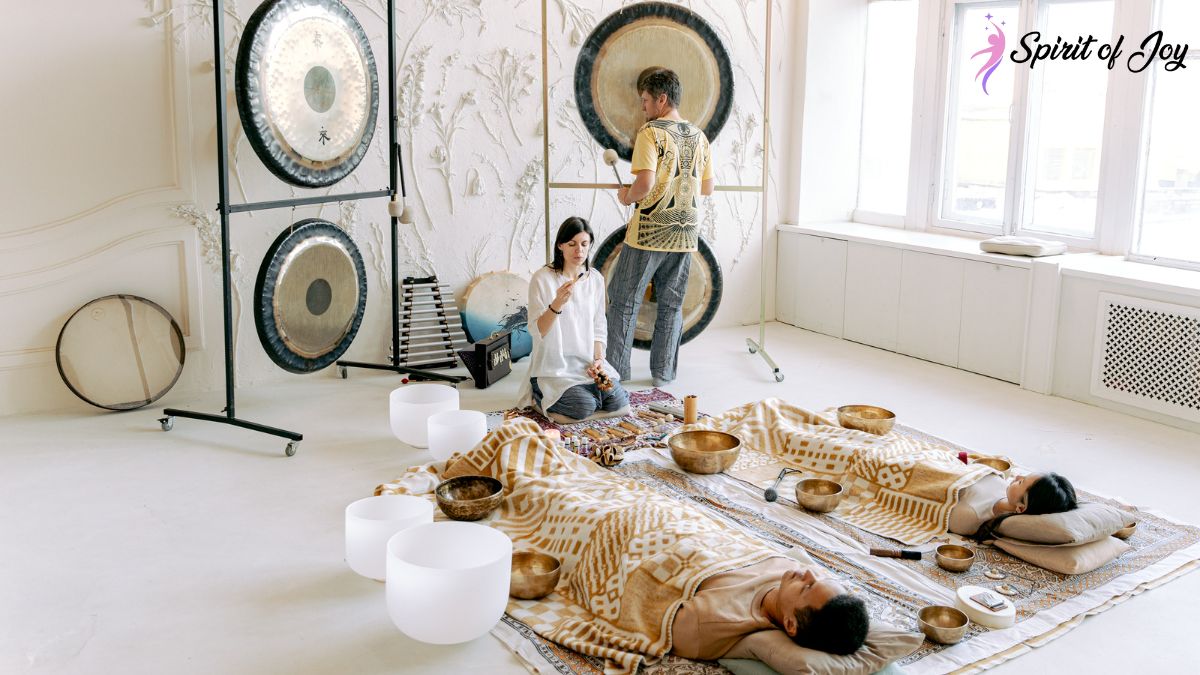
In today’s fast-paced world, singing bowls have found their place in modern wellness practices, mesmerizing us with their alluring melodies. These mystical instruments are captivating modern audiences and are being integrated into spaces like yogaA spiritual and ascetic practice aimed at achieving union with the divine, encompassing physical pos... studios and wellness retreats. By embracing both traditional and modern wellness trends, singing bowls offer revitalizing effects that promote relaxation and tranquility.
Modern sound therapists and music therapy practitioners are increasingly using singing bowls to help clients achieve a state of calm and balance. Their ability to promote relaxation is invaluable in our hectic lives. Here are some vivid ways in which singing bowls are being utilized:
- Yoga Studios: Enhancing meditation sessions with resonant tones that deepen the practice.
- Wellness Retreats: Creating serene environments where guests can unwind and rejuvenate.
- Therapy Sessions: Sound therapists use these sessions to facilitate emotional healing and reduce stress.
- Personal Use: Individuals incorporate singing bowls into their daily routines for personal mindfulnessThe practice of being fully present and aware in the moment, often used to reduce stress, enhance we... and relaxation.
Finding the Right Practitioner
When finding the right practitioner for sound meditation rituals, we should make sure their background and experience resonate with us. It’s crucial to take into account their training and certification, as well as recommendations from others who’ve had positive experiences.
Let’s also trust our intuitionThe ability to understand or know something immediately, without the need for conscious reasoning. and choose someone whose approach aligns with our goals and makes us feel at ease.
Practitioner Resonance Importance
Finding the right practitioner for sound meditation is necessary for achieving the full benefits of the practice. The resonanceThe principle that energy frequencies can affect and synchronize with each other, often used in heal... between a sound therapy practitioner and us is pivotal for a successful and effective healing session. When we connect with the right practitioner, it enhances our overall experience and outcomes, allowing us to truly tap into the transformative power of sound meditation.
Practitioners used in sound meditation have the ability to communicate with the ancestors, creating a bridge between us and ancient wisdom. This connection can have a profound impact on our healing journey. To help you visualize, consider these key aspects:
- Energy AlignmentThe process of balancing and harmonizing the body's energy centers and fields to promote overall wel...: We need a practitioner whose energy matches ours, ensuring a harmonious and impactful experience.
- Personal Chemistry: The bond between practitioner and client can greatly deepen the relaxation and healing achieved.
- Skill and Experience: The practitioner’s expertise in sound therapy is essential for guiding us through the meditation ritual effectively.
- Safe Environment: A nurturing and secure space created by the practitioner is necessary for us to fully immerse in the practice.
Minimal Equipment Needs
Building on the significance of practitioner resonance, let’s explore the minimal equipment needed for sound meditation rituals. Sound meditation is beautifully accessible because it requires very little to get started. Often, a simple Tibetan singing bowl is enough to begin experiencing the transformative power of sound waves. This minimalistic approach makes sound meditation appealing to both beginners and seasoned practitioners.
Finding the right practitioner is essential. A well-versed guide can harness the sound waves produced by bowls and other musical instruments, creating an atmosphere of deep relaxation and rejuvenation. Testimonials and case studies consistently highlight that the most profound experiences come from sessions led by skilled practitioners who can connect with their participants.
We don’t need an array of complex tools; a single, well-chosen Tibetan bowl can open the door to profound inner experiences.
This simplicity is part of the ritual’s cultural significance, making it accessible to a wide audience. With the right practitioner and minimal equipment, sound meditation becomes a powerful tool for relaxation and self-discovery, tapping into the timeless resonance of sound waves to foster well-being.
Frequently Asked Questions
Why Is Sound Meditation Important?
Sound meditation is important because it helps us achieve deep relaxation, reduce stress, and find inner peaceMeditation fosters a deep sense of inner peace and contentment, regardless of external circumstances.... By connecting with our inner selves through sound vibrations, we promote healing, balance energy, and enhance overall well-being.
What Culture Is Sound Healing From?
Sound healing comes from diverse cultures like Tibetan Buddhism, Japanese ZenA school of Buddhism that emphasizes meditation, mindfulness, and direct experience of the present m..., and Nepalese traditions. We see its roots in these practices where singing bowls play an essential role in meditation, spiritual rituals, and promoting holistic well-being.
What Is the History of Sound Bath Meditation?
We see the history of sound bath meditationA form of meditation that involves listening to resonant sounds from instruments like gongs, crystal... stretching back to ancient Tibet, Japan, and India. These cultures used instruments like singing bowls and gongs to harness sound waves for healing, balancing energy, and promoting deep relaxation.
Is There Scientific Evidence for Sound Healing?
Yes, there’s scientific evidence for sound healing. Studies show it reduces stress, anxiety, and chronic pain. It improves sleep and emotional balanceMeditation promotes emotional stability and helps manage mood swings, leading to a more balanced emo.... MRI scans even reveal brain activity changes during sound meditation, proving its effectiveness.
Conclusion
In exploring the ancient origins and evolution of sound meditation, we’ve seen just how culturally significant these practices are. From shamanic beliefs to modern applications, sound healing offers profound benefits despite facing some criticisms and challenges. By understanding traditional instruments and practices, we appreciate their lasting impact. As we seek the right practitioners, we’re not just tapping into wellness; we’re connecting with a rich, timeless tradition that continues to resonate deeply within us.